
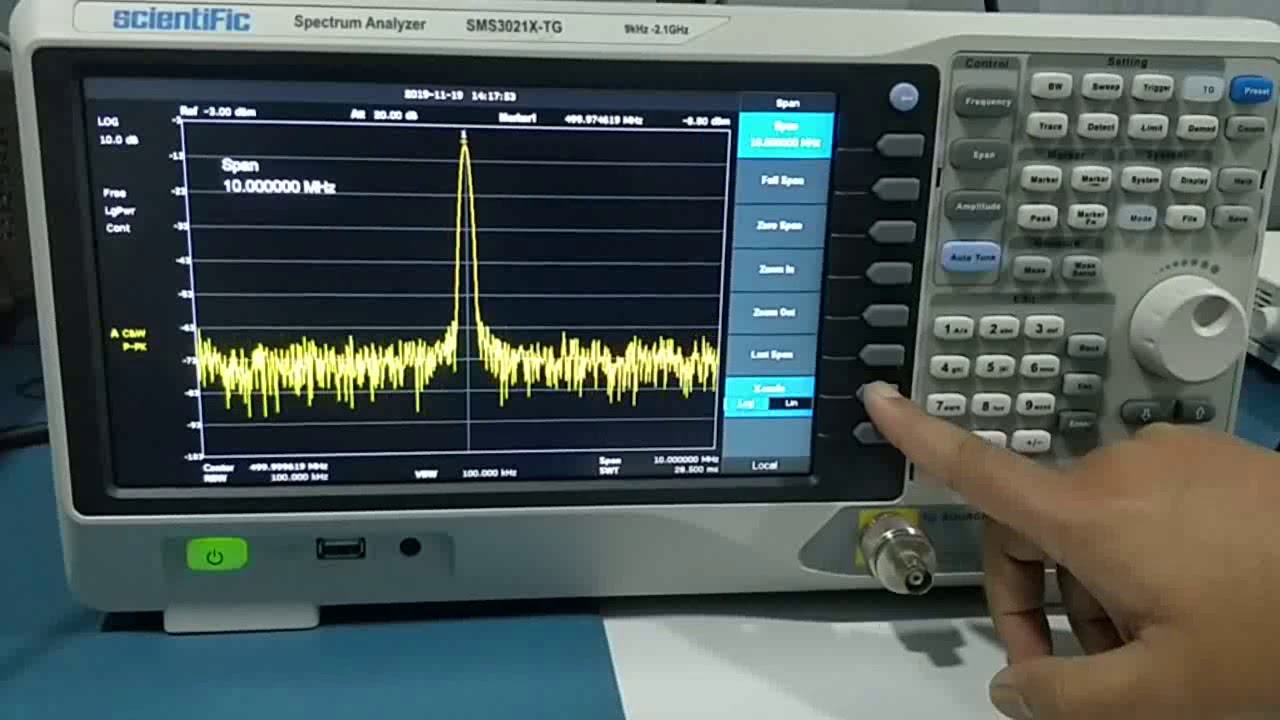
Sector Insights:
The global spectrum analyzer market is gaining strong growth with largest share and its happed only because rising demand for advanced signal testing across telecom, aerospace & defense, semiconductor, and automotive radar sectors. According to the Stalwart Research Insights they clearly show in their latest strategic industry outlook, The market is gained USD 2.2 Bn in 2025 and is projected to reach around USD 5.1 Bn by 2035 with registering a CAGR of 8.6%.
We knew it the recent market conditions are significantly influenced global concern through the ongoing geopolitical tensions particularly Middle East conflicts and global trade restrictions which are disrupting critical supply chains. Expanding shortages of key inputs or raw materials such as helium which is essential for semiconductor manufacturing with advanced chips and optical components are increasing equipment costs and delaying production cycles.
At the same time increasing rapid expansion of 5G infrastructure with boosting investments in AI-driven semiconductor ecosystems are intensifying demand for high-frequency testing solutions. The spectrum analyzers are becoming more critical components for mmWave validation with interference detection and network optimization especially as telecom networks grow more complex.
If we looking forward the globally many governments are increasing their investments in defense communication systems with electronic warfare capabilities and satellite-based connectivity are driving demand for advanced signal intelligence and spectrum monitoring tools. The shift toward localized manufacturing and supply chain resilience strategies is also encouraging adoption of in-house testing infrastructure to boosting market growth.
Segment Analysis:
RF Spectrum Analyzers (Largest Share):
RF spectrum analyzers gained largest share within the whole market due to their critical role in wireless communication testing.
- Increasing deployment in 5G and private network infrastructure.
- High demand in defense signal intelligence and surveillance systems.
- Rising importance for real-time interference detection in congested RF environments.
- The ongoing improvement in mmWave and ultra-high frequency testing.
This segment remains shows fastest growth because it enables precise signal validation across increasingly complex wireless ecosystems.
Optical Spectrum Analyzers (Second Largest Segment):
Optical spectrum analyzers are creating broad marketplace due to increasing fiber-optic network deployment.
- Growing demand from hyperscale data centers and cloud infrastructures.
- Expansion of high-speed optical communication systems.
- Rising need for accurate optical signal testing and maintenance.
- Advancements in high-resolution optical analysis.
This segment is beneficial to captures market from the surge in global data traffic and bandwidth requirements.
Regional Outlook:
Asia-Pacific is fastest growing economy contributes to highest growth through the high requirement in semiconductor manufacturing and aggressive 5G rollout even supply chain disruptions are pushing countries toward regional self-reliance strategies. While North America continues to lead growth because provide financial support for innovation due to private 5G adoption and defense investments. In a Europe is gaining growth momentum with automotive radar and industrial communication upgrades, while the Middle East & Africa are expected to create emerging due to satellite communication expansion and strategic digital infrastructure investments.
Regulatory & Innovation Drivers:
The market is shaped trough the government stricter regulations which is related to spectrum allocation with interference management and signal compliance, driving the need for advanced testing solutions.
Key innovations shaping the market include:
- Ultra-wideband real-time spectrum analyzers supporting high-frequency validation.
- Modular multi-channel PXI-based testing platforms.
- Integrated phase-noise and wideband demodulation capabilities.
- Portable analyzers for field-based and defense applications.
- Software-defined and remote testing environments.
These advancements are improving testing precision and they also provide scalability with enhances deployment efficiency across industries.
Industry Landscape:
The spectrum analyzer market is moderately consolidated, with leading players shifting their priority to focusing on made a strong high-frequency innovation with modular platforms and application-specific solutions.
Key industry participants include:
- Keysight Technologies Inc.
- Rohde & Schwarz GmbH & Co. KG
- Anritsu Corp.
- Teledyne Technologies Inc.
- Yokogawa Electric Corp.
These companies are strengthening their market position through advanced R&D investments with expand their portfolio and strategic collaborations across telecom and defense sectors.
Industry Brief:
The industry is moving toward adapt growth momentum through the advanced and integrated testing ecosystems.
- Rising demand for ultra-high frequency and mmWave validation.
- Expansion in satellite and defense communication systems.
- Increasing adoption in automotive radar and autonomous technologies.
- Growing need for real-time and remote testing capabilities.
Market Scenario Analysis:
The market outlook clearly reflects to hold strong growth which shaped trough the recent geopolitical and technological dynamics.
- Middle East conflicts disrupting helium supply and semiconductor production cycles
- Global chip shortages and capacity bottlenecks impacting equipment availability
- Trade restrictions on advanced RF components which reshaping global sourcing strategies.
- Rising investments for 5G, AI infrastructure and defense electronics sector.
- Expanding replacement toward localized manufacturing and resilient supply chains.
The industry is experiencing transformations toward offering high-frequency provider with software-defined and resilient testing ecosystems with adaptability or more precision and supply chain stability will define long-term competitive advantage.