
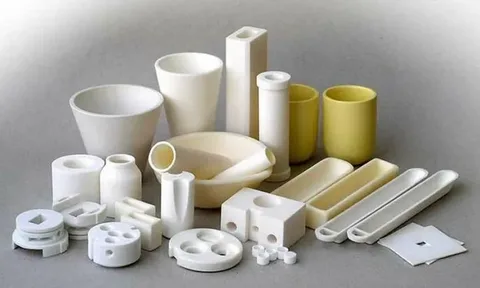
The global landscape for high-performance materials is undergoing a structural transformation toward lightweight, high-strength, and thermally resilient solutions. According to the latest strategic industry outlook by Stalwart Research Insights, the global Advanced Ceramics Market valued at USD 121.4 billion in 2025 is projected to reach USD 198.6 billion by 2035, expanding at a steady CAGR of 5.0%.
The industry is transitioning from conventional ceramics to precision-engineered, application-specific materials designed for extreme environments. By 2027, the market is expected to surpass USD 132 billion, reflecting accelerated adoption across electronics, medical devices, aerospace, automotive, and renewable energy sectors.
The Technology Leap: From Traditional Ceramics to Engineered Performance Materials
The hallmark of the 2026 advanced ceramics industry is the shift toward functional, high-purity, and nano-structured ceramic materials engineered for superior performance.
This transformation is driven by:
• Growing demand for lightweight alternatives to metals
• Expansion of semiconductor and EV manufacturing
• Rising healthcare device innovation
• Increasing need for heat- and corrosion-resistant materials
• Advancements in ceramic matrix composites (CMCs)
Industry experts note that advanced ceramics are no longer niche specialty materials — they are becoming foundational components in high-tech manufacturing ecosystems.
Download Sample PDF Copy of this Report to understand structure of the complete report :
https://www.stalwartresearchinsights.com/request-sample/advanced-ceramics-industry-outlook-2020-2035
Segment Leadership: Alumina & Zirconia Dominate
Alumina-Based Ceramics Lead (Largest Share)
Alumina ceramics command the largest product share due to:
• Excellent hardness and wear resistance
• Electrical insulation properties
• Cost-effectiveness compared to other advanced ceramics
• Wide applicability across electronics and industrial machinery
Zirconia & Silicon Carbide – High-Growth Segments
Zirconia ceramics are gaining traction in medical implants and dental applications due to biocompatibility and fracture toughness. Meanwhile, silicon carbide and silicon nitride are expanding rapidly in aerospace, EV power electronics, and high-temperature industrial components.
Application Analysis: Electronics & Electrical Drive Demand
Electrical & Electronics Segment (Largest Share)
The electronics industry continues to lead adoption, supported by:
• Semiconductor packaging growth
• Miniaturization of components
• Thermal management requirements
• Insulation materials in high-voltage systems
Advanced ceramics are critical in substrates, capacitors, insulators, and chip packaging due to high dielectric strength and thermal stability.
Automotive & EV Acceleration
With global EV expansion, advanced ceramics are increasingly used in:
• Battery components
• Powertrain systems
• Sensors and control modules
• Thermal barrier coatings
Their ability to withstand high temperatures and electrical loads makes them essential in next-generation electric mobility platforms.
Medical & Aerospace Applications
In healthcare, advanced ceramics are widely adopted for:
• Orthopedic implants
• Dental prosthetics
• Surgical instruments
In aerospace, ceramic matrix composites (CMCs) are enabling lighter, fuel-efficient aircraft engines capable of operating at higher temperatures.
Regional Outlook: Asia-Pacific Leads Global Production
While North America and Europe remain innovation hubs, Asia-Pacific holds the largest market share and is projected to register the fastest growth through 2035.
Growth drivers include:
• Strong electronics manufacturing in China, Japan, and South Korea
• Rapid EV production growth
• Expanding semiconductor fabrication facilities
• Government investments in advanced materials research
Asia-Pacific’s integrated manufacturing ecosystem continues to fuel large-scale consumption of advanced ceramic materials.
Regulatory & Innovation Drivers: Performance Meets Sustainability
Governments and industries are emphasizing:
• Energy-efficient manufacturing processes
• Reduced carbon emissions in materials production
• Lightweight material substitution to improve fuel economy
• Sustainable sourcing of raw ceramic materials
Manufacturers are investing heavily in:
• Nano-ceramic technologies
• Additive manufacturing of ceramics
• Advanced sintering techniques
• Hybrid ceramic-metal composites
Strategic Outlook Toward 2035
The advanced ceramics industry is no longer limited to specialty industrial applications — it is becoming a core enabler of high-performance, electrified, and miniaturized technologies.
The next decade will be defined by:
• EV and semiconductor expansion
• Ceramic matrix composite innovation
• Growth in medical-grade bioceramics
• Asia-Pacific manufacturing dominance
• Sustainable and energy-efficient material processing
The industry is evolving into a technology-driven, high-value materials ecosystem, positioned for resilient and innovation-led global growth through 2035.
Browse Trending report:
Mountain Bicycle Helmets Industry
Radioactive Material Logistics Industry
Smart Electric Bicycle Industry
Unlock the Future of Advanced ceramics industry : Trends and Strategies to 2036
Discover the latest formulation innovations from advanced sensor integrations to AI-driven predictive analytics that are reshaping industry standards.
For an in-depth analysis of evolving trends, competitive landscapes, and a comprehensive strategic outlook through 2036, visit the official report page here.
Gain actionable insights to future-proof your operations and seize emerging opportunities.