
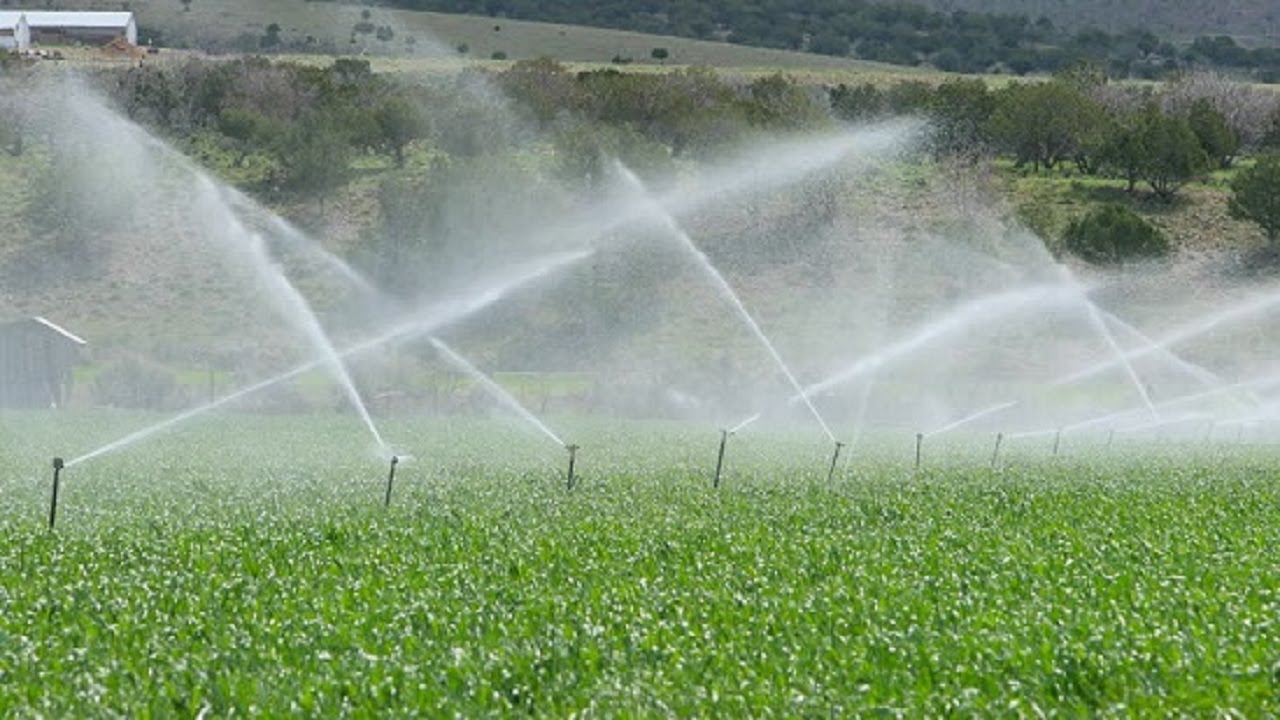
Rising Water Scarcity and Precision Farming Driving Adoption
The global sprinkler irrigation systems market is moving towards notable transformation because increasing agricultural practices which led to shift toward water-efficient and mechanized irrigation solutions. According to the latest strategic industry outlook by Stalwart Research Insights they clearly mention that, the market is gained USD 3.89 Bn in 2025 and is projected to reach approximately USD 5.63 Bn by 2032 with reflecting a CAGR of 5.4% during the forecast period. Thes growth is primarily driven through the rising water scarcity even increasing demand for yield optimization and rapid adoption of precision irrigation across field crops, orchards and commercial landscapes.
This expansion is becoming more prominent in reality as traditional flood irrigation methods are gradually being replaced by advanced sprinkler system. That is enable for uniform water distribution and minimize wastage. Globally governments trying across emerging regions and developed economies are promoting micro-irrigation adoption through subsidies and infrastructure investments further accelerating market penetration.
Precision Agriculture and Mechanization Accelerating Market Transformation
The market is witnessing to the strong adoption of sprinkler irrigation systems because rising rate of adopt for precision agriculture techniques to improve productivity and resource efficiency. In the mechanized irrigation solutions such as central pivot and lateral move systems are gaining traction particularly in large-scale farming operations.
Gaining growth because increasing advanced sprinkler technologies including pressure-regulated rotating heads and low-drift nozzles are enabling optimized water delivery with reduced evaporation losses. These innovations are particularly beneficial in arid and semi-arid regions where water conservation is critical.
Key growth drivers include:
• Increasing adoption of precision irrigation technologies
• Rising deployment of central pivot and lateral move systems
• Growing need for water-use efficiency in agriculture
• Expansion of mechanized farming practices.
These developments are contributed for enhancing the role of sprinkler irrigation as a critical component of modern agricultural systems.
Strong Demand from Field Crops and Orchard Cultivation
In the field crops and orchard plantations applications continue to dominate demand within the sprinkler irrigation systems market. Even the rotating head systems account for a significant share doing supported by their ability to provide uniform coverage across large agricultural areas.
This shift is lead toward high-value crops and horticulture is further contributing to market expansion as these crops require controlled and efficient irrigation systems. Even the landscape and turf irrigation applications are gaining momentum in urban and commercial infrastructure projects.
Key demand trends include:
• High adoption across field crops and orchard plantations
• Growing demand from horticulture and high-value crops
• Expansion of landscape and turf irrigation applications
• Increased focus on crop yield optimization
This demand creates diversification for supporting to the sustained growth across multiple end-use segments.
Smart Irrigation Technologies Enhancing Efficiency and Automation
Increasing advancement in technological are playing a crucial role in shaping the sprinkler irrigation systems market. It involved innovations such as integration of IoT-enabled controllers, automated scheduling systems and remote monitoring platforms is transforming irrigation management.
Even smart controllers and sensor-based irrigation systems are enabling for provide real-time data-driven decision-making with improving water efficiency and reducing operational costs. It has included many companies like Netafim and Valmont Industries are actively investing in smart irrigation platforms to enhance system performance and reliability.
Key innovation trends include:
- Adoption of IoT-enabled irrigation controllers
- Integration of remote monitoring and automation systems
- Development of climate-resilient sprinkler technologies
- Use of data analytics for irrigation optimization
These advancements are enabling for farmers to transition toward more sustainable and efficient irrigation practices.
Infrastructure Investment and Policy Support Strengthening Market Growth
Within these market government initiatives and policy frameworks are significantly influencing expansion. Mant countries across Asia Pacific, the Middle East, and Latin America are investing heavily in irrigation infrastructure to address water scarcity and enhance agricultural productivity.
It involved multiple subsidy programs and modernization initiatives are encouraging farmers to adopt advanced irrigation technologies. For instance, in emerging economy for promoting to the large-scale irrigation programs to the replacement of traditional irrigation methods with efficient sprinkler and drip systems.
Key growth enablers include:
- Government subsidies for micro-irrigation adoption
- Expansion of agricultural infrastructure investments
- Focus on climate-resilient farming practices
- Support for water conservation initiatives
These supportive measures are accelerating the adoption of sprinkler irrigation systems globally.
Competitive Landscape Focused on Innovation and Expansion
The market is moderately consolidated, with dominant players shifted their focus on how to offered innovation in technologies and how to build strong global expansion strategies. It has involved participant many top companies such as Jain Irrigation Systems Ltd., Rain Bird Corporation, and Rivulis are strengthening their market presence through product innovation and strategic collaborations.
These market participants are ready for provide strong financial support in smart irrigation solutions even solar-powered systems and customized retrofit services to cater to diverse agricultural requirements.
Key competitive strategies include:
- Expansion of smart irrigation product portfolios
- Investment in R&D and automation technologies
- Development of region-specific irrigation solutions
- Strategic partnerships and acquisitions
This competitive environment is continuous driving continuous innovation and market growth.
Transition Toward Sustainable and Water-Efficient Agriculture
The sprinkler irrigation systems market is moving toward a for preferred to adapting more sustainable and technology-driven future. As another side with continuous increasing pressure on global water resources also rising demand for food production with efficient irrigation solutions are becoming essential.
When these market is looking ahead, the integration of digital technologies continuous lead to the expansion of climate-resilient irrigation systems and growing adoption in emerging markets. This market is well-positioned to play a critical role in advancing sustainable agriculture and ensuring long-term water security.