
Sector Insights:
The global aircraft maintenance, repair, and overhaul (MRO) market is undergoing a structural transformation toward adapting digitally integrated, performance optimized and lifecycle are driven maintenance ecosystems. According to the latest strategic industry outlook by Stalwart Research Insights, the globally market anticipated approximately USD 92,000.0 million in 2025 and it is projected to reach nearly USD 156,000.0 million in 2035 with expanding at a steady CAGR of 5.4%.
The replacement from conventional time taking inspection models to adopting condition based like AI-integrated and predictive maintenance frameworks provide support for aircraft availability with optimized fleet performance and cost efficiency. Growth is expected to surpass USD 105,000.0 million in 2027 because of rising global fleet size with increasing narrow-body aircraft deliveries and accelerating engine overhaul cycles with also expanding third-party maintenance outsourcing across commercial aviation networks. Recent advancement in technologies such as digital twin platforms, real-time engine health monitoring systems and automated maintenance tracking boosting long-term asset lifecycle management across airlines and leasing companies.
Segment Analysis:
Engine MRO (Largest Share):
Engine MRO represents the largest revenue contributor globally due to its high-cost intensity and technical complexity.
- Rising engine shop visits driven by higher flight cycles.
- Increasing demand for module replacement and full performance restoration.
- Growing penetration of power-by-the-hour and long-term service contracts.
- Expansion of global engine overhaul facilities capable for overcome turnaround time.
Next-generation turbofan engines require smart technologies such as advanced diagnostics, predictive analytics integration and precision component refurbishment significantly increasing per-aircraft maintenance expenditure.
Airframe Heavy Maintenance (Second Largest Segment):
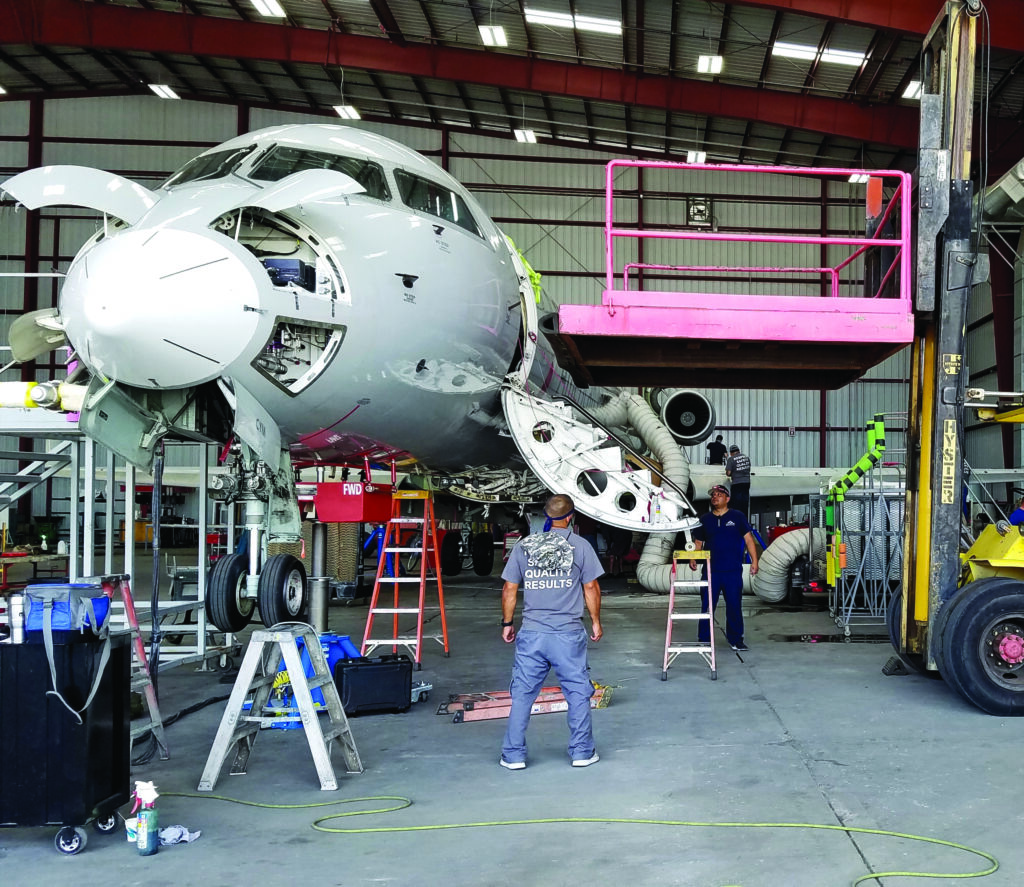
Airframe MRO continues to anticipated rapid share through the replacement of aging fleet dynamics and mandatory structural inspection requirements.
- Growing C-check and D-check maintenance programs.
- Rising composite material repair and structural modification demand.
- Increasing cabin retrofit and interior upgrade programs.
- Expansion of hangar infrastructure at major aviation hubs
As aircraft age, structural inspections and compliance-driven upgrades are enhancing heavy maintenance revenue visibility.
Regional Outlook: Asia-Pacific Showing Rapid Growth
Asia-Pacific is projected to register the fastest growth during the forecast period supported by rapid fleet expansion across India, China, and Southeast Asia.
Growth factors include
- Rising demand from middle class population for air travel.
- Rapid induction of narrow-body aircraft by low-cost carriers.
- Government-supported MRO infrastructure development initiatives.
- Localization of engine overhaul and component repair facilities.
The region’s competitive labor structure and expanding aviation ecosystem are accelerating hangar construction and engine maintenance capacity expansion.
North America maintains stable growth due to expanding extensive installed aircraft base and advanced MRO capabilities led by providers such as AAR Corp. and Delta TechOps.
Europe continues to demonstrate strong maintenance capabilities with help of dominant companies including Lufthansa Technik AG and Air France Industries KLM Engineering & Maintenance, particularly in advanced engine and airframe servicing.
Regulatory & Innovation Drivers: Sustainability and Digitalization at the Core
Global aviation safety mandates and environmental compliance requirements are increasing maintenance frequency and retrofit programs.
- Stricter airworthiness directives driving inspection cycles.
- Emission reduction targets influencing engine efficiency upgrades.
- Digital compliance documentation improving traceability.
- Cybersecurity standards strengthening connected maintenance systems.
Technology leaders such as GE Aerospace and Rolls-Royce Holdings plc are expanding predictive engine analytics and digital lifecycle management platforms for enhancing maintenance precision and reduce unscheduled downtime.
Automation in structural inspections with also supporting to robotics-assisted repair and drone-based aircraft surface analysis are improving turnaround efficiency and lowering operational risk.
Industry Landscape:
The Aircraft MRO market reflects competitive expansion driven by rising engine overhaul capacity investments, digital maintenance platforms, and global facility network growth. Independent MRO providers and OEM affiliated service divisions are building strategies for long-term service contracts and regional joint ventures to capture high-growth markets.
Key industry participants include:
• Lufthansa Technik AG
• GE Aerospace
• Rolls-Royce Holdings plc
• Air France Industries KLM Engineering & Maintenance
• ST Engineering
Industry Brief:
The Aircraft MRO industry is progressing through a stable expansion phase supported by increasing aircraft backlogs and lifecycle management strategies.
- Long-term engine service agreements improving revenue predictability.
- Rising aircraft leasing penetration strengthening third-party maintenance demand.
- Expansion of Asia-Pacific MRO hubs capturing new global contracts.
- Aging fleet structures driving heavy airframe inspection demand.
- Increasing predictive maintenance adoption improving fleet efficiency.
Market Scenario Analysis:
The market outlook reflects resilient demand patterns which is beneficial for driven primarily by engine-intensive fleets and high aircraft utilization.
- Captured diversified revenue streams across engine, airframe, and component segments.
- Capacity optimization improving turnaround time efficiency.
- Emission compliance influencing retrofit and engine upgrade demand.
- Competitive intensity increasing between OEM-affiliated and independent MRO providers.
- Supply chain localization reducing spare parts delivery risks.
Comprehensive Market Overview:
The Aircraft MRO market showing balanced yet engine driven growth provide support by expanding modernization in fleet and increasing flight activity.
- Engine overhaul is key segment generating revenue.
- Aging aircraft cycles strengthening heavy maintenance visibility.
- Asia-Pacific is fastest growing economy contributes to growth due to expanding regional hub.
- Digital transformation enhancing lifecycle management precision.
- Long-term service agreements ensuring sustainable maintenance demand through 2035.
Sector Deep Dive:
Rapid technological advancement and sustainability integration are redefining Aircraft MRO performance benchmarks worldwide.
- Adoption of advanced composite repair technologies.
- Integration of digital twin systems enhancing predictive analytics.
- Deployment of AI-based engine health monitoring solutions.
- Smart hangar automation improving operational productivity.
- Expansion of high-value engine overhaul infrastructure supporting next-generation aircraft platforms.