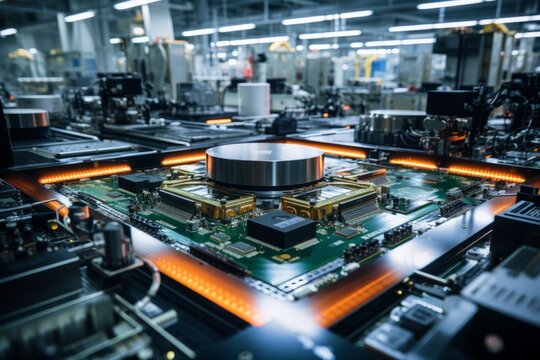
The semiconductor industry has become the backbone of modern technology, powering everything from smartphones and electric vehicles to artificial intelligence and advanced defense systems. As global demand for chips continues to rise, governments and technology companies are investing heavily in new semiconductor fabrication plants (fabs). For investors and industry stakeholders, semiconductor manufacturing facilities represent a long-term strategic investment with significant growth potential.
Rising Global Demand for Semiconductor Manufacturing
The global semiconductor shortage experienced during the pandemic exposed the vulnerabilities of highly concentrated chip manufacturing. A large share of advanced semiconductor production is currently dominated by companies such as Taiwan Semiconductor Manufacturing Company, Samsung Electronics, and Intel. This concentration has encouraged governments and corporations worldwide to diversify chip manufacturing across multiple regions to ensure supply chain resilience.
The rapid growth of artificial intelligence, electric vehicles, 5G infrastructure, and data centers is further accelerating semiconductor demand. As a result, investors are increasingly exploring opportunities to finance new fabrication plants and support semiconductor ecosystem development.
Strategic Expansion Through Regional Diversification
Establishing semiconductor fabs in multiple regions is becoming a key strategy for technology companies seeking to reduce geopolitical risks and optimize production costs. Instead of concentrating production in a few countries, companies are expanding operations across Asia, North America, and Europe.
For example, government-backed initiatives such as the CHIPS and Science Act in the United States and the European Chips Act aim to encourage domestic semiconductor manufacturing through subsidies, tax incentives, and infrastructure support.
Regional diversification not only reduces supply chain disruptions but also allows companies to distribute production loads across multiple facilities, improving operational efficiency and scalability.
Emerging Investment Destinations with Lower Labor Costs
One of the most important considerations in semiconductor manufacturing expansion is labor cost and talent availability. While advanced fabs require high automation, skilled engineers and technicians remain essential to operations.
Several emerging regions are becoming attractive locations for semiconductor investments due to lower labor costs and government incentives:
India
India is rapidly emerging as a semiconductor manufacturing hub due to strong government support, expanding electronics manufacturing, and a large engineering talent pool. Government initiatives promoting semiconductor manufacturing are encouraging global investors to establish fabrication and packaging facilities.
Southeast Asia
Countries such as Vietnam, Malaysia, and Thailand are gaining attention for semiconductor packaging, testing, and assembly operations. Lower labor costs and improving infrastructure make these countries ideal for expanding semiconductor supply chains.
Eastern Europe
Nations such as Poland and Czech Republic are attracting semiconductor investments due to their proximity to European automotive and electronics manufacturing clusters.
Latin America
Countries like Mexico are benefiting from nearshoring strategies by North American companies seeking to reduce supply chain dependency on Asia.
Capital Investment and Infrastructure Considerations
Building a semiconductor fabrication plant is one of the most capital-intensive industrial projects. A single advanced fab can require investments ranging from $10 billion to over $20 billion depending on the technology node and production capacity.
Investors must carefully evaluate several critical factors before committing to a semiconductor fab project:
- Availability of reliable electricity and water supply
- Access to semiconductor-grade chemicals and raw materials
- Skilled workforce and technical expertise
- Government incentives and tax benefits
- Proximity to electronics manufacturing clusters
Logistics and export infrastructure
In addition to fabrication facilities, investors can also explore opportunities in related segments such as semiconductor packaging, testing, materials, and equipment manufacturing.
Strategic Role of Collaborative Manufacturing
To manage high capital requirements and mitigate risks, many companies are adopting collaborative manufacturing models. Partnerships between semiconductor firms, governments, and private investors are becoming increasingly common.
For instance, foundry partnerships allow companies to share production capacity while reducing upfront capital investment. Joint ventures also help distribute production loads across multiple geographic regions, improving supply chain resilience.
Long-Term Growth Outlook
The semiconductor industry is expected to experience strong long-term growth as digital technologies continue to expand across sectors. Demand from artificial intelligence, autonomous vehicles, renewable energy systems, and advanced computing will continue to drive semiconductor innovation.
For investors and strategic planners, semiconductor fabrication plants represent a high-value opportunity that combines industrial infrastructure with advanced technology development. By carefully selecting locations with strong policy support, cost advantages, and supply chain connectivity, investors can build resilient semiconductor manufacturing ecosystems.
As the global race for chip manufacturing intensifies, early investments in regional semiconductor hubs will play a crucial role in shaping the future of the global technology economy. At Sublime Informatics, we specialize in delivering detailed feasibility studies, project reports, and market intelligence designed to support investment planning and business strategy. Our reports provide in-depth insights into market opportunities, industry trends, competitive dynamics, financial projections, and investment requirements. These insights help businesses identify profitable opportunities and reduce uncertainty when making critical decisions.