
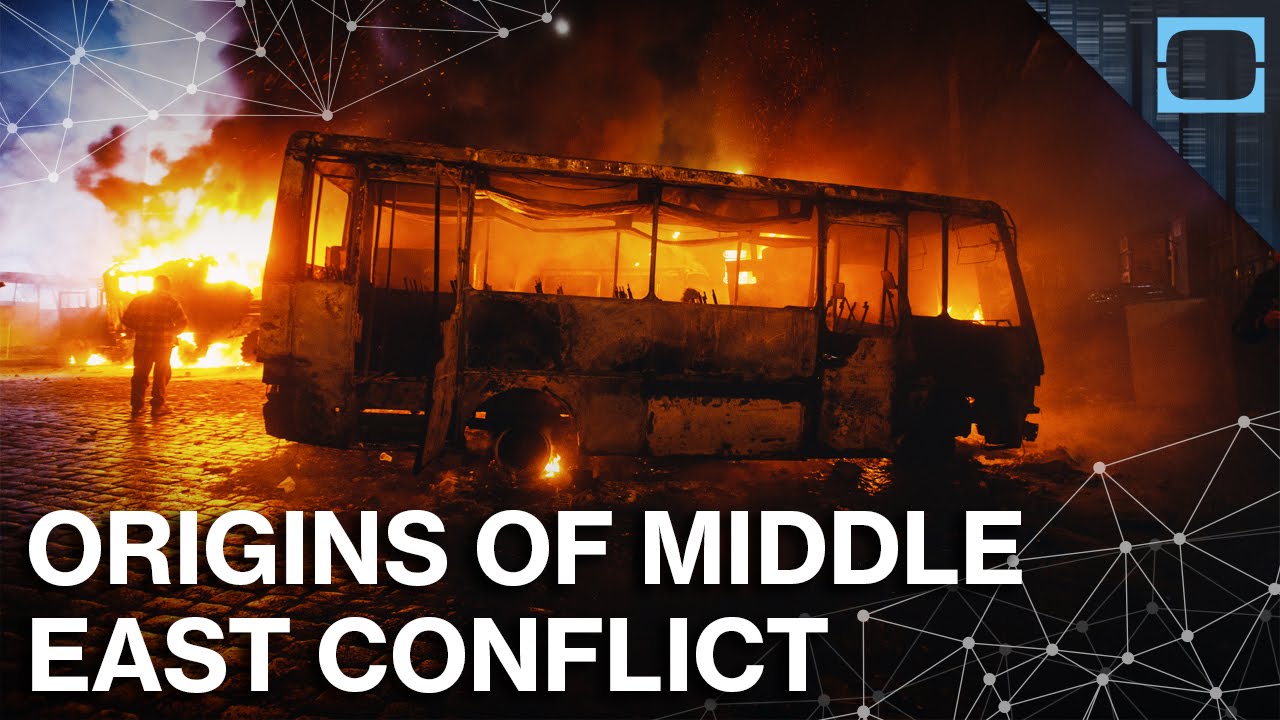
As conflict continues to simmer across the Middle East, European economies are confronting a complex web of consequences — from surging energy import costs and strained logistics corridors to accelerated defense spending and a renewed push for energy independence. This report examines the granular impact of ongoing Middle East instability on Europe’s six largest markets and the sectors most exposed to geopolitical disruption.
Europe’s geographic and economic proximity to the Middle East makes it uniquely vulnerable to spillovers from the region’s ongoing conflicts. Unlike previous episodes of instability that were largely contained in their financial consequences, the current wave of Middle East tensions has arrived alongside a still-fragile European economy recovering from years of post-pandemic inflation, the Russia-Ukraine energy crisis, and slowing global trade. The compound effect of these pressures is being felt from energy markets and shipping lanes to defense procurement budgets and investor sentiment.
Brent crude prices have oscillated between $88 and $105 per barrel in 2025-2026, sustained in part by Middle East supply-risk premiums. European natural gas futures, already elevated due to residual Russia-supply anxiety, have received additional upward pressure as LNG re-routing through the Suez Canal becomes less predictable. Germany’s industrial heartland, France’s aerospace and defense champions, Italy’s export-dependent manufacturers, and Spain’s tourism and logistics sectors each face distinct but interconnected headwinds.
Energy Markets: The Primary Transmission Channel
Europe imports approximately 27% of its crude oil and 18% of its liquefied natural gas from or through Middle Eastern supply corridors. The Suez Canal and the Strait of Hormuz serve as twin chokepoints through which an estimated 21 million barrels of oil per day transit globally. Disruptions or even the credible threat of disruption to these routes translate directly into European import cost inflation.
Oil & Gas Price Pressures
Since the escalation of hostilities in early 2025, European energy companies have been paying a geopolitical risk premium of approximately $6–12 per barrel above pre-conflict levels. This premium, while manageable for diversified majors like Shell, BP, Total Energies and ENI, is proving particularly burdensome for mid-sized industrials and energy-intensive manufacturers across Germany, Italy, and the Netherlands.
Germany, which imports over 95% of its oil and approximately 85% of its natural gas, faces the most acute exposure. With Russian pipeline gas effectively off the table since 2022, Germany’s dependence on Middle Eastern LNG via the newly constructed floating LNG terminals at Brunsbüttel and Wilhelmshaven has grown dramatically. Any sustained interruption to MENA LNG supply chains would put upward pressure on European wholesale gas prices that are still 40-60% above their pre-2021 averages.
Sector-by-Sector Market Impact
| Sector | Impact | Market Outlook |
| Energy & Utilities | High crude & LNG import cost; grid instability risk | Defensive; renewables acceleration continues |
| Defence & Aerospace | NATO rearmament surging; EU defence budget +8% YoY | Strongly Positive — BAE, Airbus, Rheinmetall |
| Shipping & Logistics | Red Sea re-routing adds 10-14 days; freight costs +30% | Negative short-term; supply chain rewiring |
| Automotive (Germany/IT) | Component supply risk; fuel cost pass-through pressure | Cautious; EV pivot accelerating as buffer |
| Tourism (Spain/Greece/IT) | ME tourists declining; regional anxiety suppressing travel | Moderate negative; pivot to US/APAC tourists |
| Chemicals & Fertilisers | Feedstock cost inflation (ammonia, phosphates from ME) | Negative; European producers at cost disadvantage |
| Banking & Finance | Risk-off sentiment; sovereign spread widening in South EU | Cautious; ECB watching inflation re-ignition |
| Technology & Defence-Tech | Dual-use tech exports scrutiny rising under EU AI Act | Complex; cyber security demand strongly positive |
Trade and Logistics: The Red Sea Disruption
Perhaps the most immediate and broadly felt impact across European markets is the disruption to Red Sea shipping lanes caused by Houthi attacks on commercial vessels. This conflict dimension has forced major container lines — Maersk, Hapag-Lloyd, MSC, and CMA CGM — to divert vessels around the Cape of Good Hope, adding approximately 10 to 14 extra transit days to Asia-Europe journeys and raising freight rates by an estimated 25-35% above pre-conflict norms.
European importers of Asian-manufactured goods — particularly electronics, textiles, and automotive components — have seen inventory disruption and cost inflation. The Netherlands’ Port of Rotterdam, Europe’s largest and primary entry point for Asian container goods, has reported volume fluctuations as supply chain managers seek alternatives. The economic cost to European trade of the Red Sea disruption is estimated at approximately €8-12 billion in additional freight and logistics costs annually.
“The Middle East conflict has reminded European policymakers that energy security, supply chain resilience, and defence readiness are not independent policy silos — they are deeply interconnected dimensions of a single strategic challenge.”
— European Council on Foreign Relations, Geopolitical Risk Assessment, Q1 2026
Investment and Market Outlook
Despite the headwinds, European equity markets have shown resilience, supported by strong earnings in the defence and energy sectors and by the ECB’s measured approach to monetary policy. The EURO STOXX 50 declined approximately 4.2% in the immediate aftermath of major conflict escalation events before recovering as investors discounted a prolonged but contained conflict scenario. Defence stocks have outperformed the broader index by approximately 22% over the trailing 12 months.
The medium-term outlook for Europe hinges on three key variables: whether oil prices sustain above $95/barrel (inflationary), whether the Red Sea disruption becomes a permanent structural feature of Asia-Europe trade (supply chain repricing), and whether European defence spending commitments translate into sustained industrial investment (transformative opportunity for the continent’s defence-industrial base).
Strategic Recommendations for Businesses Operating in Europe
- Hedge energy input costs through longer-term forward contracts and accelerate renewable energy procurement strategies
- Review supply chain resilience for components sourced through Red Sea logistics corridors; build 60-90 day strategic inventory buffers
- Identify positioning in the European defence supply chain — even non-defence firms can supply components, materials, or services to Tier 2/3 defence contractors
- Monitor ECB policy trajectory closely; re-ignited energy inflation could delay rate cut cycles and maintain financing cost pressure
- Assess GDPR and EU AI Act compliance for any dual-use technology products to navigate tightening export controls