Drone Strike Ignites Major Fire at Strategic UAE Oil Hub, Disrupts Export Operations:
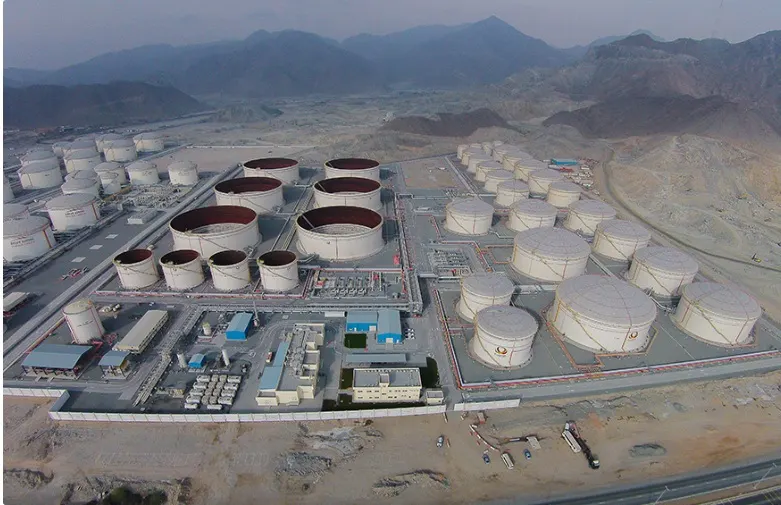
A drone attack today sparked a major fire at the Fujairah oil export hub in the United Arab Emirates (UAE). It will be raising global energy security concerns and temporarily halting critical export operations because is the one of strategic petroleum industrial zones in Middle East’s. The incident underscores how energy infrastructure even outside the Strait of Hormuz become more vulnerable amid escalating regional tensions.
These strategic energy terminals located outside of the Strait of Hormuz on the Gulf of Oman, the Fujairah terminal plays vital role in global oil logistics it is important export point for crude oil destinations for global markets, particularly Asia, Europe, and Africa. The attack forced authorities to halt oil loading operations temporarily, while emergency crews worked to contain the blaze. After the Fujairah strike incident shortly another fire attack near in Dubai Airport linked to a drone strike which affecting on a fuel tank which enhancing global geopolitical concerns about the escalating frequency and sophistication of attacks on energy infrastructure in the region.
Strategic Impact on Global Energy Supply Chains:
- The Fujairah oil hub is a key node in international energy logistics which serving as a transit and export point for millions of barrels of crude oil in every day.
- Temporary shutdowns in loading operations directly affect the global throughput supply chain which created pressure among the already constrained global oil markets.
- Disruptions at major terminals can lead to price volatility in Brent and other benchmark oil prices which influencing inflation and high costs required for production costs worldwide.
- Consumer nations reliant on Middle East energy exports may re‑evaluate risk management strategies and diversify import sources to mitigate exposure.
Market analysts warn that even isolated attacks on export infrastructure can trigger ripple effects that impact global energy futures and investor sentiment total fall in darkness. Globally energy traders are closely monitoring shifts in supply flow expectations and strategic reserve usage as markets react to infrastructure vulnerabilities.
Regional Geopolitical Ramifications:
The UAE’s critical energy infrastructure has operated for decades without major disruptions but based on recent scenario especially this attack is a part of a series of incidents targeting energy and transport assets highlights changing threat dynamics in the Middle East. These kind of regional conflicts and proxy engagements have broadened beyond traditional battlefields with non‑state actors and drone technologies increasingly used to target industrial and civilian infrastructure.
Strategic Impact:
- Increased defensive focus towards oil terminals, pipelines, and refineries as part of national security planning.
- Collaboration among Gulf Cooperation Council (GCC) members to bolster surveillance and early detection systems for unmanned aerial threats.
- International dialogue on securing global energy corridors such as the Strait of Hormuz, Bab al‑Mandab and key export terminals.
Experts suggest that energy security strategies will need to account for asymmetric threats that do not require large forces but can still impart significant economic and operational damage.
Emergency Response and Infrastructure Resilience:
Emergency crews at Fujairah acted swiftly to contain the fire demonstrating the effectiveness of local response systems. However, these incident exposes the critical importance of resilience planning in high‑value industrial zones that serve global supply networks.
- Investment in advanced firefighting capabilities and automated shutdown protocols can reduce damage from unexpected strikes.
- Enhancing cross‑agency coordination between energy operators, military, and civil response units is essential.
- Insurance and risk assessment models may shift to incorporate higher premiums for coverage of geopolitically exposed assets.
Globally energy provider companies operating in the region are likely to accelerate contingency planning which has including redundant infrastructure, also remote monitoring systems and rapid incident response teams capable of mitigating damage in real time.
The drone attack at the Fujairah oil hub underscores a critical juncture in global energy security: Across the region manyinfrastructures that underpins international supply chains is now an active target in regional conflicts. The event not only disrupted export loading operations but also sent significant signals whole energy markets for strategic planning communities worldwide. As nations and companies reassess vulnerabilities, resilience investments and multilateral cooperation may become priorities to safeguard energy continuity in an increasingly volatile security environment.