Sector Insights: Real-Time Water Intelligence Becoming Core to Infrastructure Planning:
The global water quality monitoring market is expanding rapidly with strong and sustained growth which driven by rising concerns over water safety with environmental protection and regulatory compliance. According to the latest strategic industry outlook by Stalwart Research Insights they clearly mention that, The market is gained USD 6,078.2 million in 2025 and is projected to surpass USD 12,182.2 million by 2035 with registering a CAGR of 7.2% during the forecast period.
This expansion happed is largely because it is increasing through the shift from periodic manual sampling toward adapt continuous which will supportive to real-time monitoring across municipal water systems. It has huge potentials futures from industrial discharge points and drinking water distribution networks even governments are providing investments in smart water infrastructure. This contribution beneficial for reduce contamination risks with enhance supply reliability and comply with tightening environmental standards.
During these same time, globally rapidly growing urbanization and industrial activity are intensifying pressure on water resources with making accurate and continuous monitoring a necessity rather than an option. The integration of IoT-enabled sensors and connected monitoring platforms is enabling utilities and industries to achieve faster response times for improved data accuracy, and better system-wide visibility.
Regulatory Enforcement and Risk-Based Water Management Driving Adoption:
• Strong enforcement of wastewater discharge norms across industrial sectors
• Increasing focus on risk-based water quality monitoring frameworks
• Mandatory compliance requirements for municipal water utilities
• Rising public health concerns pushing real-time contamination tracking.
These factors are collectively contributing for transforming monitoring systems into compliance-critical infrastructure.
Market Structure Evolution: Hardware Dominance with Rising Data-Centric Ecosystems:
Sensors Anchoring Market Revenues
• Account for nearly 65% of total market share
• Widely installed across treatment plants and distribution pipelines
• Enable continuous monitoring of pH, turbidity, dissolved oxygen, and conductivity
• Growing shift toward multi-parameter and low-maintenance sensor systems
Digital Platforms Accelerating Value Creation
• Rapid growth in data acquisition and visualization software
• Adoption of centralized dashboards for multi-location monitoring
• Increasing use of analytics for compliance and reporting
• Integration with cloud platforms for remote accessibility
Field-Level Challenges Impacting Deployment Efficiency:
- High capital investment required for continuous monitoring systems
- Sensor fouling and accuracy issues in complex water environments
- Limited availability of skilled technicians in developing regions
- Fragmented data systems reducing interoperability across networks.
These operational create barriers are directly influencing adoption rates particularly in cost-sensitive regions.
Expanding Monitoring Footprint Across Diverse Water Environments:
We knew this market boosting with growing emphasis on sustainable urban development and energy optimization.
• Rapid deployment across municipal water treatment and distribution systems
• Increased adoption in industrial wastewater and effluent monitoring
• Growing use in laboratory testing and environmental assessment
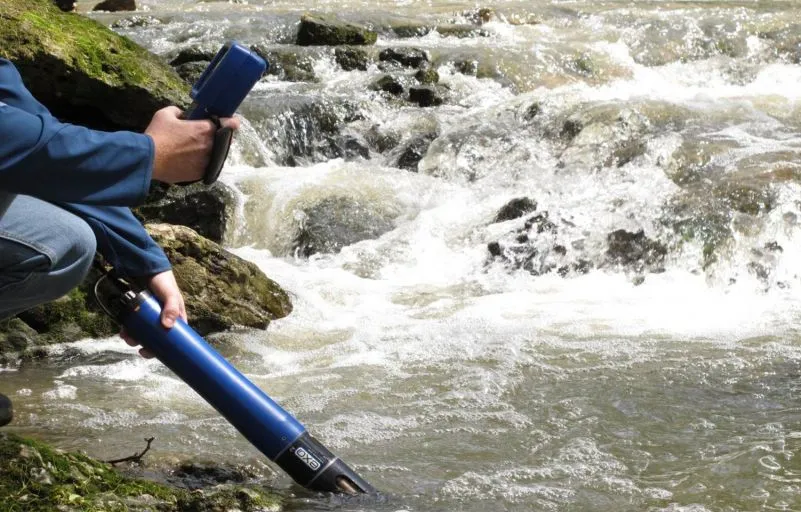
• Emerging deployment in remote water bodies through mobile and floating systems.
The market is gradually expanding beyond traditional applications it shifted toward full-spectrum water ecosystem monitoring.
Precision Monitoring Technologies Enhancing System Reliability:
Increasing continuous advancement within the market for technologies are significantly enhancing the performance and scalability of district energy systems.
- Development of multi-parameter sensing platforms for comprehensive analysis
- Introduction of self-cleaning probes reducing maintenance frequency
- Growth in real-time remote monitoring systems with wireless connectivity
- Improved detection capabilities enabling faster identification of contaminants
These innovations are collectively improving monitoring accuracy while reducing operational burden.
Operational Value Delivered Through Advanced Monitoring Systems
- Strengthens compliance with environmental and safety regulations
- Enables immediate detection of contamination events
- Reduces reliance on manual testing and field inspections
- Enhances decision-making through continuous data availability
Competitive Landscape and Strategic Expansion:
Key industry participants include:
• Xylem
• Danaher Corporation
• Siemens
• HORIBA
• Emerson Electric
• Teledyne Technologies
• ABB.
Strategic Approaches:
• Development of integrated sensing and monitoring ecosystems
• Expansion of cloud-enabled and remote monitoring solutions
• Focus on modular and scalable product offerings
• Partnerships with municipalities and industrial operators
Market Trajectory: From Monitoring Tools to Intelligent Water Governance Systems
This market is nowadays continuous experiencing transitioning from standalone testing equipment to integrated and intelligent monitoring ecosystems. Increasing globally government regulatory scrutiny with expand infrastructure modernization and the need for real-time decision-making are reshaping the role of monitoring systems in water management.
Over the next decade, the market will evolve toward adapt fully connected which should be supportive to data-driven water networks where monitoring systems play a central role in ensuring sustainability. In this marker mandatory to follow compliance with maintain operational efficiency specially cities and industries prioritize water security, advanced monitoring technologies will become a foundational component of global water infrastructure.