Rising Winter Safety Mandates and Smart Infrastructure Driving Market Growth
The global snow removal services market is creating notable growth gaining environment with demand intensifies across municipal infrastructure, transportation networks, and commercial facilities. According to the latest strategic industry outlook by Stalwart Research Insights they clearly mention that, the market is dominated at USD 76.35 Bn in 2025 and is projected to reach approximately USD 109.84 Bn by 2032 with reflecting a CAGR of 5.3% during the forecast period. Gaining growth based on increasing winter safety compliance lead requirements with operational continuity needs and the rising frequency of unpredictable snowfall patterns linked to climate variability.
This growth is becoming reality because increasing pronounced trough the governments and private operators they prioritize for uninterrupted mobility across highways, airports, and logistics corridors. It continuous led to shift from conventional manual snow clearing toward mechanized and technology-driven service models is significantly enhancing operational efficiency and scalability.
Climate Variability and Infrastructure Dependency Accelerating Demand
The market is gaining growth momentum due to increasing dependency on reliable snow removal services in regions experiencing erratic snowfall patterns. Even climate variability has made snowfall less predictable with increasing the need for rapid-response and contract-based snow clearing services.
Increasing invest heavily across the municipalities, airports, and logistics operators for advanced snow removal solutions to ensure minimal disruption during winter conditions.
Key demand drivers include:
• Rising unpredictability in snowfall patterns
• Increasing dependency on continuous transportation operations
• Expansion of municipal and highway infrastructure
• Growing need for winter safety compliance.
These factors are reinforcing to the critical role of snow removal services in maintaining infrastructure resilience.
Snow Plowing Dominates While De-icing Gains Momentum
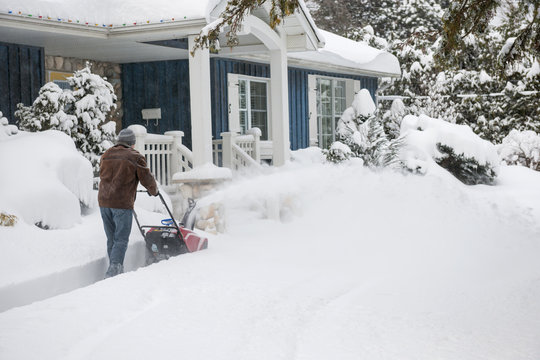
Snow plowing continues to hold largest share due to increasing these application extensive uses across highways, urban roads, and commercial properties. However, de-icing and salting services are expected to the witnessing faster growth due to increasing focus on accident prevention and regulatory compliance.
These adoption of eco-friendly de-icing solutions is also rising which driven by environmental concerns and stricter regulations on chemical usage.
Key segment trends include:
• Strong demand for snow plowing across large-scale infrastructure
• Rising adoption of de-icing and salting solutions
• Increasing use of eco-friendly and bio-based de-icers
• Growth in integrated winter maintenance services.
This shift clearly the highlights the transition toward more comprehensive and sustainable service offerings.
Autonomous Technologies and Smart Fleet Systems Transforming Operations
Rising advancement in technologies are significantly reshaping the snow removal services market. The integration of LiDAR-guided autonomous snowplows, real-time fleet routing systems and thermal pavement sensors is enabling more efficient and precise operations.
The smart fleet management systems are improving route optimization and must be reducing fuel consumption for enhancing response times during heavy snowfall events. These innovations are particularly valuable for large-scale municipal and airport operations.
Key innovation trends include:
- Deployment of autonomous and semi-autonomous snowplows.
- Integration of real-time route optimization platforms.
- Adoption of thermal and pavement condition sensors.
- Increasing demand for development of chloride-free bio-based de-icing solutions.
These advancements contributing to the reducing manual intervention while improving operational efficiency through the stricter environmental compliance.
Regulatory Frameworks and Safety Standards Driving Adoption
Increasing strictness of regulatory frameworks are playing a crucial role in shaping market growth. Even the governments across North America and Europe are enforcing to the strict winter road safety standards requiring timely snow clearance and hazard mitigation.
It includes programs such as national winter maintenance initiatives and infrastructure safety directives are encouraging investment in advanced equipment and service capabilities.
Key regulatory drivers include:
- Enforcement of winter road safety compliance standards.
- Government funding for infrastructure resilience programs led to demand.
- Increasing promotion program for environmentally sustainable de-icing practices.
- Adoption of performance-based service contracts.
These policies contributing to accelerating the transition toward technologically advanced snow removal solutions.
Competitive Landscape Focused on Fleet Modernization and Smart Services
The snow removal services market is moderately consolidated, with key players taking efforts for focusing how to improve fleet modernization, automation and long-term municipal contracts to strengthen their market position.
Top Industry Players:
• Oshkosh Corporation
• Douglas Dynamics
• The Toro Company
• Alamo Group
• Husqvarna AB
Key competitive strategies include:
- Expansion of autonomous snow removal capabilities
- Investment in smart fleet and routing technologies
- Development of eco-friendly de-icing solutions
- Strengthening multi-year municipal service contracts
This competitive environment is major players continuous increasing their financial invest for expand the fostering innovation and improving service scalability across regions.
Transition Toward Smart and Service-Based Snow Management Ecosystems
The snow removal services market is evolving because many services provide shifted toward provide integrated, service-based ecosystems must be supported by advanced technologies and data-driven operations. Increasing emergence requirements for subscription-based snow removal models and smart city integration is expected to redefine service delivery frameworks.
In the upcoming period increasing huge potentials opportunities lie in autonomous fleet deployment with predictive weather-based service planning and embedded snow-melting infrastructure technologies. Unpredictable climate variability continues to impact on winter conditions which lead the demand for efficient and scalable snow removal solutions will remain strong.