Precision Disinfection and Public Health Priorities Driving Market Growth
The global fogging market is entering a strong growth phase which leading to demand for advanced disinfection solutions continues to rise across healthcare, commercial, and municipal sectors. According to the latest strategic industry outlook by Stalwart Research Insights they clearly mention that, the market is captured almost USD 8.15 Bn in 2025 and is projected to reach approximately USD 15.86 Bn by 2032 with growing at a CAGR of 10.0% in the upcoming period.
This growth is becoming reality because increasing outbreaks of vector-borne diseases such as dengue and malaria along with heightened awareness of hygiene compliance. Compulsion of audit-grade sanitation standards within the organizations across industries are now prioritizing large-scale, efficient, and verifiable disinfection processes.
Key growth drivers include:
- Rising incidence of vector-borne diseases and epidemic preparedness
- Increasing demand for audit-grade sanitation verification
- Expansion of healthcare and public infrastructure sanitation programs
- Expand role of contract cleaning and facility management services
These factors lead transforming fogging systems from occasional-use equipment into essential infrastructure for public health and industrial hygiene.
Technology Advancements Accelerating Adoption of Precision Fogging Systems
Increasing innovations within the technological innovation is playing a central role in reshaping the fogging industry. The market is rapidly transitioning toward electrostatic ULV fogging systems, drone-based dispersal platforms and precision droplet spectrum control technologies that significantly enhance efficiency and coverage.
In the modern fogging equipment are enables for uniform chemical distribution while minimizing wastage, improving both cost efficiency and environmental compliance.
Key technology trends include:
• Adoption of electrostatic foggers for enhanced surface adhesion
• Growth of ULV (ultra-low volume) systems for efficient disinfection
• Emergence of drone-mounted fogging for large-area coverage
• Integration of programmable dispersal and dosing mechanisms.
These innovations are enabling for offered scalable deployment across urban infrastructure, industrial facilities and agricultural applications while also reducing manual intervention.
Cold Foggers Maintain Dominance While Electrostatic Systems Gain Momentum
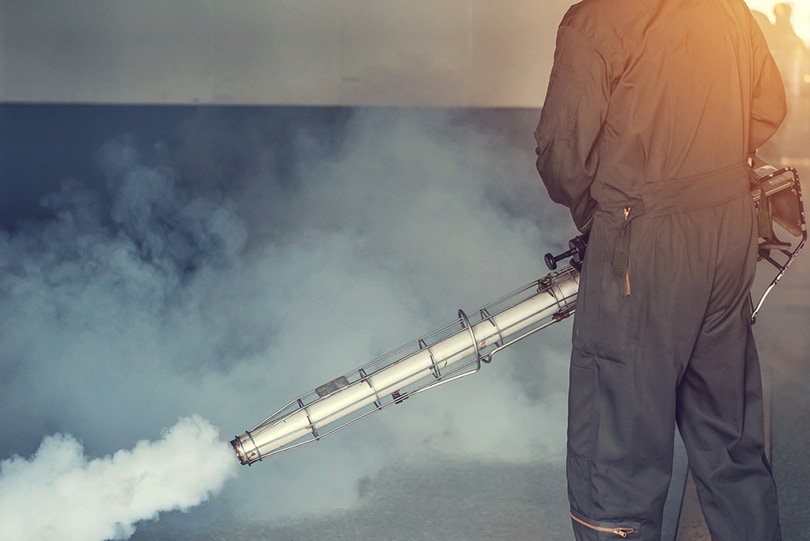
If looking from a product perspective so Cold Foggers (ULV) currently dominate the market with accounting for approximately 55% of total share due to their widespread use in healthcare and commercial sanitation.
The electrostatic foggers are expected to witness the fastest growth as demand increases for uniform surface coverage and enhanced pathogen control which particularly in high-risk environments such as hospitals, airports, and food processing facilities.
Key segment insights include:
• ULV foggers leading due to efficiency and low chemical usage
• Electrostatic foggers gaining traction in high-precision disinfection
• Thermal foggers maintaining relevance in outdoor and vector control applications
• Increasing demand for portable and battery-powered fogging units.
This segment contributing to evolution in market that reflects the growing need for application-specific solutions across diverse end-use environments.
Asia Pacific Leads While North America Strengthens Regulatory-Driven Adoption
In perspective of regional Asia Pacific holds the largest share at approximately 40% which driven through large-scale municipal sanitation initiatives and government-led vector control programs. It has involved many countries across the region are investing heavily in fogging infrastructure to manage urban health challenges.
While North America is expected to exhibit strong growth due to stringent hygiene regulations and increasing adoption across healthcare and facility management sectors.
Other regional dynamics include:
- Europe witnessing growth due to strict biocidal compliance standards
- Middle East & Africa expanding through public health sanitation programs
- Latin America emerging as a high-growth region with mosquito control initiatives.
These regional trends clearly highlight the global nature of demand provide supported to both regulatory enforcement and public health priorities.
Supply Chain Constraints and Regulatory Complexity Pose Challenges
Despite gaining strong growth potential but still fogging market faces several structural challenges. Even ongoing geopolitical tensions and trade disruptions are impacting the availability of chemicals and components, while tightening regulations on biocidal formulations are increasing compliance costs.
In the farm operators are increasingly transitioning to adapt LED-based systems not only to reduce energy costs but also to comply with environmental regulations and carbon reduction targets.
Key market restraints include:
- Disruptions in chemical supply chains due to global uncertainties
- Stringent regulations on emissions and chemical exposure
- Rising compliance complexity for small and mid-scale operators
- Increasing cost pressures on equipment manufacturers
These challenges are continuous pushing companies to innovate toward eco-friendly formulations and precision application technologies.
Competitive Landscape Focused on Precision Technologies and Market Expansion
The fogging market is moderately consolidated, with dominant players continuous enhancing their focus on provide advanced droplet control technologies and portable equipment innovation. Even they gaining efforts to expansion of global distribution networks and many companies are strengthening their positions through product differentiation. In offering after-sales services and application-specific solutions for healthcare, municipal sanitation, and industrial hygiene.
Top Industry Players:
• IGEBA Gerätebau GmbH
• PulsFOG Dr. Stahl and Sohn GmbH
• Curtis Dyna-Fog Ltd
• Longray Corporation
• B&G Equipment Company
Key competitive strategies include:
- Development of high-efficiency ULV and electrostatic systems
- Expansion of distributor and service networks
- Increasing introduction program of portable and zero-emission fogging equipment
- Rising investment in R&D for precision and automated solutions
This competitive environment is driving continuous innovation and strengthening market competitiveness globally.
Growing Demand from Urban Sanitation and Industrial Hygiene Applications
The fogging market is moving towards strong growth from urban sanitation programs, healthcare facilities and industrial environments where large-scale disinfection is critical. Rising demand across the contract cleaning and facility management sectors are also emerging as major contributors to market expansion.
- Increasing adoption in hospitals and healthcare infrastructure
- Growth in municipal sanitation and smart city initiatives
- Rising demand from industrial and commercial facilities
- Expansion of contract cleaning and pest control services
This continuous incising requirements that indicates a long-term structural shift toward continuous and large-scale disinfection practices.