
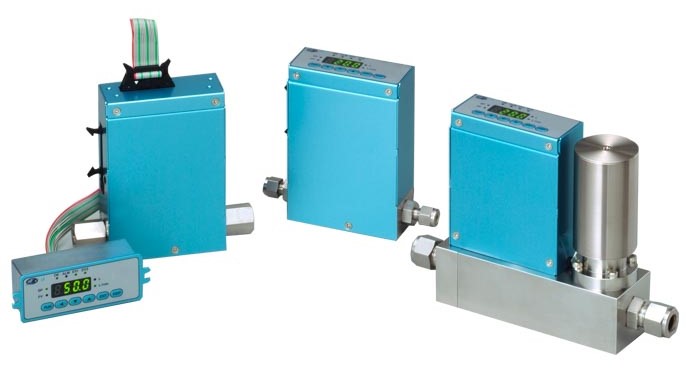
Precision Flow Control Technologies and Automation Trends Accelerating Market Growth
The global mass flow controllers market is rapidly moving towards adapt strong expansion which driven through the rising demand for ultra-precise gas and liquid flow control across semiconductor fabrication with biopharmaceutical production and specialty chemical processing industries. According to the latest strategic industry outlook by Stalwart Research Insights they clearly mention that, The market is gained USD 1.87 Bn in 2025 and is projected to reach approximately USD 4.98 Bn by 2032 with registering a CAGR of around 15.0%. during the forecast period. Within these market increase investments for semiconductor fabs which particularly for AI-driven chip production and advanced nodes along with expansion of cleanroom manufacturing, are significantly boosting demand.
It becomes possible in reality trough the rising complexity of industrial processes because government stricter quality standards and yield optimization has requirements. It contributes to accelerating the transition toward digital and automated flow control systems and Industries are also addressing skilled labor shortages. These deploying intelligent mass flow controllers capable of real-time monitoring and consistent performance in high-purity environments.
- Surge in semiconductor fab investments for advanced node manufacturing
- Rising demand for ultra-high purity gas flow control in life sciences
- Increasing shift toward closed-loop automated process systems
These factors directly highlight a strong transition toward adapt mass flow controllers in enabling precision with maintain efficiency and compliance across modern industrial ecosystems.
Industrial Automation and High-Purity Applications Driving Demand
Mass flow controllers are becoming more essential across industries where even minor deviations in flow rates can directly impact total quality of product and operational efficiency. Their adoption is expanding rapidly in semiconductor wafer processing, even pharmaceutical manufacturing, and advanced chemical synthesis.
In semiconductor production the precise gas flow control is plays vital role for deposition which etching and lithography processes are ensuring high yield and minimal defects. In biopharmaceutical manufacturing provide accurate flow control supports consistent formulation and sterile processing. Within the industries transition toward continuous manufacturing and high-precision operations with the demand for reliable flow control systems continues to rise.
• Increased deployment in semiconductor etching and deposition processes
• Growing reliance in biopharma for controlled and sterile fluid handling
• Rising use in specialty chemicals for precise reaction control.
These applications clearly highlight the importance of mass flow controllers in maintaining process stability and improving overall production efficiency.
Technology Advancements Transforming Flow Control Systems
Increasing the technological innovation is reshaping the market with manufacturers focusing on enhancing responsiveness with accuracy and adaptability to in emerging applications. These integration of advanced sensing technologies is significantly improving system capabilities.
Within these market MEMS-based digital controllers are enabling for faster response times and improved precision, while hydrogen compatible sensors are supporting the expansion of clean energy applications. In coriolis-based flow controllers are gaining traction for their ability to provide direct mass flow measurement independent of fluid properties which making them suitable for complex industrial processes.
- Adoption of MEMS-based sensors for high-speed semiconductor applications
- Development of hydrogen-compatible flow controllers for energy systems
- Increasing use of coriolis technology in precision chemical processing.
These advancements are expanding the role of mass flow controllers across high-growth industries while enhancing performance and reliability.
Challenges in Cost, Calibration, and Standardization
Despite market gained strong growth prospects but the market still faces key challenges that may impact adoption which particularly in cost-sensitive regions. Expand the high upfront investment for build strong advanced within the digital and coriolis systems remains a major barrier for small and mid-scale manufacturers.
In the complex multi-gas calibration continuous rising requirements and the shortage of skilled professionals which create operational difficulties. Variations in regulatory standards across regions further complicate product deployment and integration into global industrial systems.
These challenges are particularly impacting on small and medium enterprises which continuous leading the cost optimization with simplified calibration processes and global standardization will be critical for long-term market expansion.
Expanding Applications Unlocking New Growth Opportunities
This application created huge potentials scope for mass flow controllers is rapidly expanding with driven through the emerging industrial trends and evolving technological requirements. Hydrogen production and fuel cell systems are creating significant new demand which particularly as global economies invest in clean energy infrastructure.
Simultaneously its increasing adoption for semiconductor processes such as CVD, ALD, and PVD, along with integration into modular and decentralized manufacturing systems is broadening the market landscape. If we looking towards cloud-based monitoring and predictive maintenance capabilities are further enhancing system efficiency and reliability.
- Rising demand from hydrogen electrolysis and fuel cell infrastructure
- Increasing use in advanced semiconductor deposition technologies
- Integration with predictive maintenance in smart manufacturing systems
These developments are positioning mass flow controllers as critical enablers of next-generation industrial transformation.
Competitive Landscape: Focus on Smart and Customized Solutions
The mass flow controllers’ market is moderately consolidated, with leading players shifting their preferences to build strong innovation with digitalization and application-specific customization to strengthen their market position.
Top Industry Players:
• Brooks Instrument
• MKS Instruments
• Bronkhorst High-Tech B.V.
• Alicat Scientific
• HORIBA STEC
These companies are ready for provide strong financial support for smart flow control technologies which should be supportive to real-time diagnostics and hydrogen-compatible designs while expanding their presence in semiconductor and clean energy markets.
Strategic Industry Focus: Semiconductor Yield Optimization and Hydrogen Process Control
Globally this market is increasingly rapidly which shaped trough the provide industry-specific performance requirements rather than broad macro trends. In semiconductor manufacturing sector shift the focus is on achieving ultra-tight process control to improve wafer yield and reduce defects. The particularly in advanced nodes where even slight flow inconsistencies can lead to significant losses which is driving demand for high-speed, ultra-accurate controllers with real-time feedback capabilities.
In the same time scaling of hydrogen production is creating a parallel demand for robust flow control systems which is capable of handling reactive gases under fluctuating operating conditions. It is not like traditional applications but also it requires hydrogen systems has enhanced material compatibility with leak-tight performance and dynamic response control.
- Increasing requirement for sub-second response controllers in semiconductor process tools
- Growing deployment of flow controllers in hydrogen electrolysis and gas distribution systems.
These targeted industry demands are pushing manufacturers towards move beyond the standard product offerings and develop highly specialized. Within the market some application which driven solutions with positioning mass flow controllers as critical infrastructure in both semiconductor value chains and clean energy ecosystems.