Escalating Conflict Raises Concerns Over Global LPG Stability:
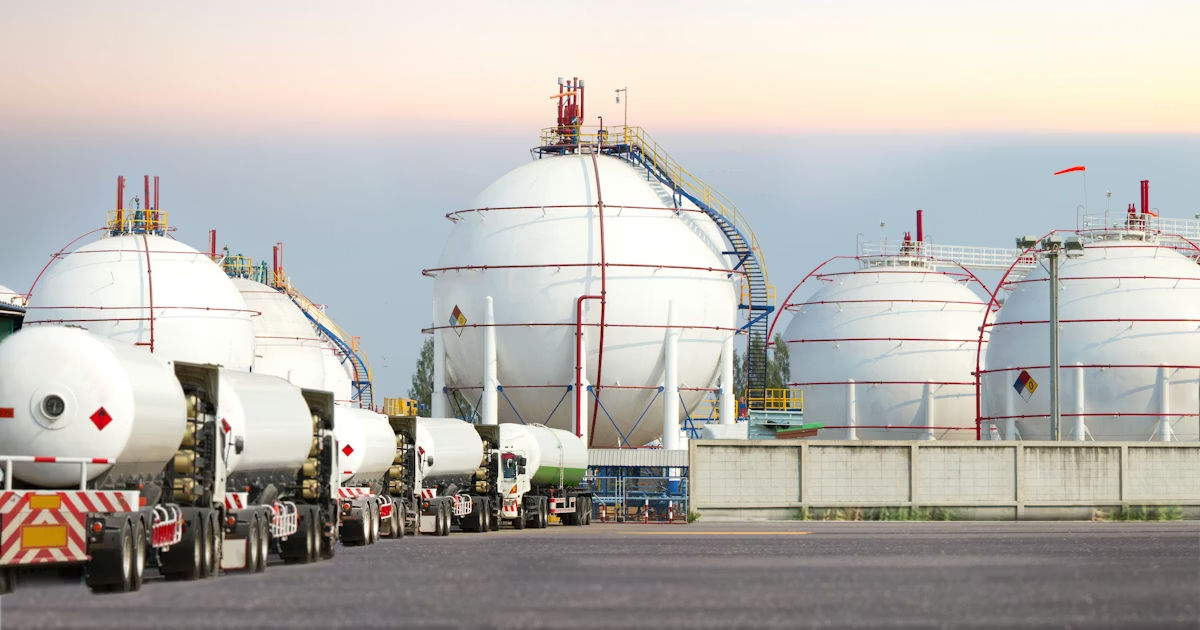
Global LPG markets suffering instability conditions due to ongoing geopolitical tensions across the Middle East continue to disrupting whole energy supply chains. Regional conflicts have created uncertainty around the smooth flow of liquefied petroleum gas shipments which particularly through key export corridors such as Strait of Hormuz, Bab el-Mandeb Strait, Suez Canal, Suez Canal and others. Every country government and energy agency worldwide are trying to monitoring the situation as the region remains a major supplier of LPG to international markets.
Strategic Impact:
• Curretnt geopolitical tensions are creating uncertainty for LPG supply chains.
• Export disruptions are affecting availability in import challenge for dependent economies.
• Energy logistics networks are becoming increasingly vulnerable to security risks.
Industry experts who have excellent for this sector they continuously highlight that even minor disruptions in major exporting regions can significantly impact LPG supply and pricing. Expanding global demand for LPG which continues to grow across residential, commercial, and industrial sectors, supply interruptions are quickly reflected in market dynamics.
• The Middle East plays a critical role in global LPG production and export.
• Global markets respond rapidly to supply disruptions.
• Import-dependent countries face increased exposure to shortages.
Economic analysts they emphasize that such developments reinforce to the importance of strengthening supply resilience with reducing dependency on single-region sourcing.
- Governments are exploring alternative sourcing strategies to stable supply of LPG.
- Supply diversification is becoming a key focus area.
- International coordination is essential to manage disruptions…
Key Maritime Routes Face Increased Security Risks:
One of the most critical factors affecting on LPG supply it is the increasing risk during the major maritime shipping routes particularly those connecting Middle Eastern exporters to global markets. These routes serve as essential channels for transporting bulk LPG shipments across continents.
Strategic Impact:
- LPG carriers are experiencing delays due to increased security concerns.
- Shipping companies are facing operational uncertainty in high-risk zones.
- Additional safety measures are being implemented across logistics networks.
Disruptions in these routes can create delays in deliveries which directly affecting on supply chains across Asia, Europe, and other regions. The impact is particularly significant for countries heavily reliant on LPG imports for domestic consumption.
- Maritime routes are essential for global LPG transportation.
- Shipping delays affect supply continuity across multiple regions.
- Energy markets react quickly to transportation disruptions.
Globally many governments and shipping operators are trying to enhancing their monitoring systems and increasing coordination to ensure safe vessel movement.
- Maritime surveillance has intensified in sensitive regions.
- Security operations are being strengthened to protect cargo.
- Shipping companies are prioritizing operational safety.
LPG Markets Respond with Supply Pressure and Demand Adjustments:
Global LPG markets are showing signs of tightening supply as disruptions continue with trying to overcome availability has led to adjustments in consumption patterns, particularly in regions where LPG is a primary household fuel.
Strategic Impact:
- Supply constraints are continuously creating pressure on LPG availability.
- Market participants are adjusting to reduced shipment volumes.
- Governments are prioritizing to fulfilled essential consumption needs to their own county rather than dependency on others.
During the shortage of increasing higher LPG prices and limited supply are expected to affect both residential and industrial users. Sectors such as hospitality, small-scale manufacturing, and energy-intensive industries may face operational challenges.
Strategic Impact:
- Increased LPG costs impact households and commercial sectors.
- Industrial activities may slow due to supply limitations.
- Energy costs increasing rapidly which may be contribute to inflationary pressures.
Experts note that market stability depends heavily on uninterrupted logistics and consistent production levels these prolonged disruptions could be led to sustained supply imbalances.
Strategic Impact:
- Stable supply chains are critical for market balance.
- Infrastructure security remains a key concern.
- Market confidence depends on geopolitical stability.
Governments and Energy Authorities Strengthen Response Measures:
Governments and energy authorities are actively implementing many strategies for stabilize LPG supply and manage demand effectively. These policies are being introduced to ensure equitable distribution and minimize the impact on essential services.
Strategic Impact:
- Governments are assessing the economic impact of supply shortages.
- Monitoring systems are being strengthened to track availability.
- Policy measures are being introduced to stabilize markets.
Several countries are looking for exploring ways to boost domestic production which beneficial for reduce reliance on imports during periods of disruption.
- Emergency planning supports short-term supply stability.
- Strategic measures enhance resilience against supply shocks.
- Contingency strategies are being prepared globally.
Experts suggest that long-term solutions include diversifying supply sources which can’t affecting such scenario and investing in alternative energy systems to reduce dependence on volatile regions.
The current LPG supply faced challenges to highlight the interconnected nature of global energy systems, where geopolitical developments directly influence supply chains and market stability. In this kind of the situation evolves governments and industry stakeholders remain focused on ensuring reliable access to LPG while strengthening long-term energy resilience.